An Offering of Words
I wrote The Forgotten Gospel by accident. One blustery November afternoon, I sat down to prepare notes for a Bible study on Leviticus—nothing more. Just an inner determination to understand a difficult book of the Bible well enough to help others through it.
I wrote The Forgotten Gospel by accident.
One blustery November afternoon, I sat down to prepare notes for a Bible study on Leviticus—nothing more. No outline or book proposal. No vision for a manuscript. Just an inner determination to understand a difficult book of the Bible well enough to help others through it.
My notes kept growing.
What I thought would be a couple pages became five, then ten. I remember looking up a few hours later and realizing I hadn’t prepared a lesson. I had stumbled into the early pages of a book.
Weeks of writing turned into months. I kept going.
At 20,000 words, I began to think this project might be worth finishing. At 30,000, I became acutely aware that I had no idea what I was doing.
So I did what I have always done when I find myself in unfamiliar territory. I read a book about it.
I studied structure, pacing, argument, tone. Having never written anything so long, I had to learn how to shape something cohesive out of something that had, until then, simply been pouring out.
At 65,000 words, I decided I needed help—an editor.
I didn’t know where to find one, or what that process looked like, but step by step I figured it out. I cut the manuscript down—too much, as it turned out—and nervously sent it to someone who was far more qualified than I was.
What came back was humbling. Pages of thoughtful feedback and rigorous queries left me a bit overwhelmed. My editor argued with nearly every point, which was exactly what I needed. His criticism forced me to see both the strengths and the gaps in what I had written.
So I went back in. I restored what I had cut too quickly and rebuilt the introduction from the ground up. I battled with chapter nine, again.
Notes became paragraphs. Paragraphs became the appendix I never planned to include. I wrote it in two days, a feat that still amazes me.
I wrote until there was nothing left to say. Slowly, a manuscript began to emerge.
By then, the project was no longer an accident.
It had become an offering.
An Offering of Words
At some point I made the decision to write something real—something serious, something weighty. Something worthy of the people who would read it. And something worthy of giving to the Most High God.
The accident became an offering of words.
Writing, as I quickly realized, was only part of the work. I needed a design that did right by the project. I needed to make publishing decisions, to seek endorsements, to place my work into the hands of influential people who did not know me and had every reason to dismiss everything I said.
And many did.
Doors closed. Emails went unanswered. Some did not take me seriously.
But others did. People from unexpected places—scholars, pastors, thoughtful authors and teachers—were willing to read and engage with the work I had done. When they emerged from it’s pages, their feedback made something very clear to me.
I had written something that, by God’s grace, was already beginning to serve others.
This book is not a product. It’s an offering. I trust that if these words carry weight, they will find their way into the hands of those who need them.
That principle is why I chose to publish this book independently. I wanted the freedom to be able to give it away electronically to those who lack the means to purchase it, a desire a traditional publisher may have found difficult to accommodate. I invite anyone who is moved by the same spirit of generosity to support this work so that it can continue.
God is faithful to multiply what is given back to him. While I have labored to shape this book, the words themselves are not mine. They are a gift I am humbled to be entrusted with.
The Fruit of a Curious Heart and a Gracious God
Everything about The Forgotten Gospel is, in its own way, a blessed accident.
I didn’t begin with answers or a plan. I started with questions about Leviticus, sacrifice, the temple. About how to make a book people dread come alive for the those gathered in my living room each week. I needed to know how its authority harmonizes with Jesus and his mission, not in vague or symbolic ways, but in the way he saw it.
More than anything, I wanted to hear the voice of Leviticus itself.
I didn’t want to make it fit a framework I had already decided was true. I wanted to understand what it was saying—and why so few of us are willing to listen.
So I kept asking.
Over time, asking became searching. Searching became studying. Studying—over years now—grew into understanding.
Then the words came. I wrote them down.
But the truth is I should never have made it this far.
I am no one remarkable. I have no formal training in the upper echelons of theology or a ministry platform on which to stand.
And yet—this seems to be the way of God. He delights in blessing the accidents. He strengthens those who have no strength of their own. He entrusts things to the ones no one expects.
The Forgotten Gospel is not the product of credentials. It is the fruit of a curious heart and a merciful God who refused to leave me behind.
It took years for me to see that Leviticus is not a detour in the story of redemption, but a window into the very heart of what God is doing—and will yet do.
In the end, the words just came as they always do.
Unbidden. Unforced. Already forming inside me long before they ever reached the page.
Sometimes the work we never intend to do becomes the burden we are asked to carry.
Laid Down in Gratitude
I have carried these words a long way—
from where they first began
to where they now come to rest.
I lay them down on the altar of this frail and earthly frame,
in gratitude—an offering to the One who first gave them.
May they rise, to you oh Lord,
and find favor in your sight.
Why I Wrote a Book About Leviticus (Of All Things)
If you had asked me a few years ago—hypothetically—what book of the Bible I would one day write about, Leviticus would not have made the list. Not even close.
If you had asked me a few years ago—hypothetically—what book of the Bible I would one day write about, Leviticus would not have made the list.
Not even close.
Leviticus is the book most of us skim or skip entirely. It’s where Bible reading plans go to die somewhere around mid-February. It’s strange, repetitive, and heavy with details that don’t seem to connect to modern faith.
Yet there it sits at the very center of the Torah, the center of Israel’s Scriptures, and the center of the story that defines Jesus.
So why write a book about it?
The short answer is this: I came to see that Leviticus is essential to the gospel, and I couldn’t not share what I had learned.
Jesus said he came to fulfill the Torah—and Leviticus is at the heart of it.
In Matthew 5:17, Jesus says:
“Do not think that I have come to abolish the Torah or the Prophets; I have not come to abolish them but to fulfill them.”
It’s a familiar verse. One we tend to read and nod along with, and then move past.
But I began to wonder: do we actually take Jesus at his word?
Because if he did not come to abolish the Torah, then we have to wrestle with what it means that he came to fulfill it. And that question becomes especially pressing when we arrive at Leviticus—the book that sits at the center of the Torah’s main tension: how can a holy God dwell among unholy people?
Leviticus is not a side note. It is the core of the good news. It’s where we learn what it means for a holy God to draw near to unholy people—what that looks like and what it costs to make it possible.
And when you start paying attention, you begin to notice something: Jesus lives and speaks as if Leviticus still matters.
He operates within categories of clean and unclean.
He spends a huge amount of time in and around the temple.
He is deeply moved by the fate of Jerusalem—the place of God’s dwelling.
And he seems to believe that its story is not over.
That realization alone was enough to stop me in my tracks.
“Fulfilled” does not mean “replaced”—and that changes how we read everything.
Somewhere along the way, many of us inherited an assumption: that once Jesus came, Leviticus—and much of the Torah—was effectively finished.
Not abolished, exactly. But completed (past tense) in a way that no longer holds real weight. As though Jesus arrived, died, rose again, and poof—the Torah was fulfilled and done. But the more I sat with Jesus’ words, the less that assumption held up.
He goes on to say that those who set aside even the least of these commandments—and teach others to do the same—will be called least in the kingdom. To me, that didn’t sound like a system that’s been rendered irrelevant.
And it raised uncomfortable questions:
If Leviticus is“fulfilled” by him basically doing away with it, why insist he didn’t come to abolish it?
If the Torah is complete and already behind us, why warn against setting its commands aside?
That tension forced me to ask deeper questions: what if I’ve been reading all of this wrong?
That shift changed everything.
Instead of reading Leviticus as a dry relic—something that once mattered but no longer does—I began to read it for what it was actually saying. I tried to see it as Jesus did: a framework that points forward. One that finds its depth and future in the work of Messiah, but is not discarded by him. I asked,
What if the categories still matter?
What if the vision still matters?
What if the priesthood, the sacrifices, the rhythms of worship all still matter?
And what if its story is still unfolding?
Suddenly, Leviticus became impossible to ignore. I began to realize that a book that was central to the life and mission of my Savior was not central to me.
That needed to change.
I had questions no one seemed to be answering.
Once those first two realizations settled in, they opened up a flood of questions.
If Leviticus still matters, how does it matter?
If it hasn’t been replaced, how should we read it now?
What do we do with sacrifice, priesthood, ritual, the Day of Atonement?
How did Jesus understand these things? And how did his first followers hold these things alongside faith in him?
And what about the New Testament? The temple?
Paul, Galatians, Hebrews? The new covenant? “You’re free from the Law!” I went looking for answers.
I read books, articles, and journals. I listened to sermons and podcasts. I took classes. I searched for voices asking these same questions. And I found…very little.
There were excellent scholars writing about Leviticus in its ancient context. There were thoughtful theologians explaining how Jesus relates to the law. But usually, the conversation seemed to stop too soon. Leviticus was either reduced to metaphor, absorbed into church tradition, or ultimately dismissed as something Jesus came to transcend.
None of them could answer the question I was asking: what does it mean to take Jesus at his word—that he didn’t come to abolish the Torah—and take Leviticus seriously at the same time?
I couldn’t shake the sense that Jesus didn’t read Leviticus the way I did. He didn’t stand over it, deciding how he’d render it all obsolete. He stepped into it. He let it shape his mission. His identity. His understanding of what he came to do—and what God is still doing.
For him.
For the Jewish people.
And for the world.
And that left me with a decision. I could set those questions aside, or I could follow them wherever they led.
So I wrote the book I couldn’t find.
I didn’t start with a plan to write a book.
I started with a growing, gnawing sense that I had missed something.
So I began tracing the threads, from Leviticus into the Prophets, the Gospels, and the letters. From the tent at Sinai to the heavenly tabernacle still destined, one day, to descend to the land.
I stopped trying to read Leviticus backwards—starting with conclusions about Jesus and forcing the text to fit them—and instead tried to read it the way Jesus knew it: as a living part of the story he was stepping into.
What I found was not a disconnected system of ancient rituals that Jesus replaced with himself at the cross. I found a vision of a people and a tent that are at the very center of everything God still intends to do.
And I found that without Leviticus, I completely misunderstood almost everything about Jesus and his mission.
Why this book—and why now?
I wrote this book because I think we’ve lost something.
Not just a book of the Bible, but a critical piece of the story that most of us don’t even know.
We’ve learned to read the New Testament without its foundation.
To talk about Jesus without the categories he lived within.
To celebrate fulfillment without understanding what is being fulfilled.
And in doing so, we’ve emptied the gospel of Leviticus—and our future hope of its promises.
The Forgotten Gospel is my attempt to recover that missing piece.
Not by discovering something new, but by returning to something old.
As old as Sinai.
As old as covenant.
As old as the gospel itself.
An Invitation to Reimagine Leviticus
If Leviticus has ever felt distant to you, you’re not alone. If you’ve wondered why it’s there, or what it has to do with Jesus, you’re asking the right questions.
And if you’ve assumed it no longer matters, because no one has ever shown you why it would—I understand.
But what if that assumption is wrong?
What if the book we forgot is the one that helps us see the gospel more clearly? What if, instead of leaving Leviticus behind, we’re meant to grow into it? What if we need to reimagine Leviticus?
That’s the question that started this journey, and it’s the one that led me to write The Forgotten Gospel.
Some stories deserve to be remembered. Leviticus is one of them.
Banks of a River
You don’t always notice the banks of a river. Only later, when you emerge downstream and catch your breath from the surging journey, do you realize something has been holding it all together.
“I wanna hold you close but never hold you back,
just like the banks do the river.”
You don’t always notice the banks of a river.
You first notice the current, the pull, the way it carries you somewhere you didn’t plan to go.
Only later, when you emerge downstream and catch your breath from the surging journey, do you realize something has been holding it all together.
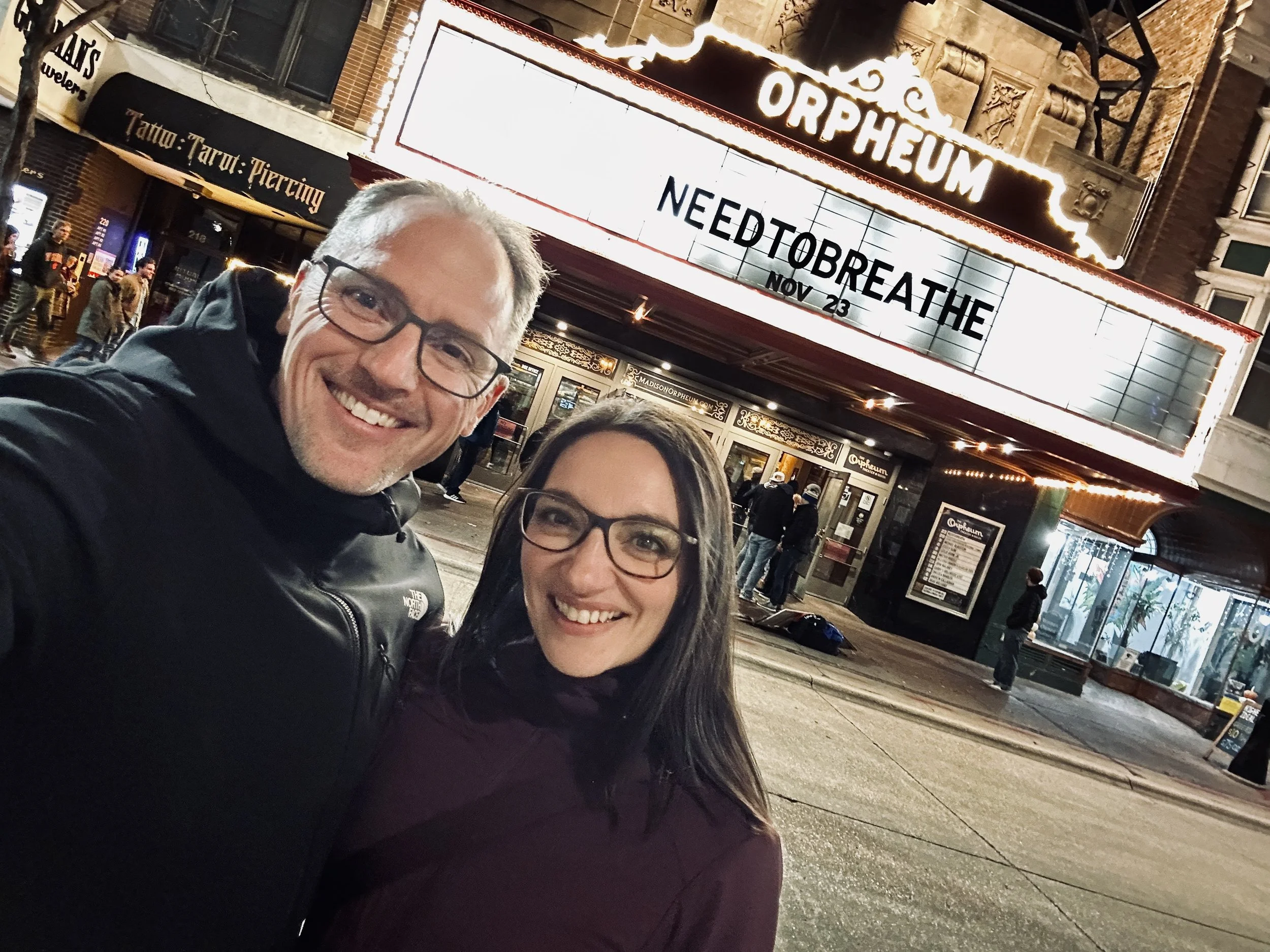
Long before I ever typed a single word of The Forgotten Gospel, my husband knew I would write a book.
Back when our house was full of babies and toddlers, he would take them out—to the park, the store, anywhere—just so I could sit in the quiet and write my little hobby blog. I didn’t have a following. (I still don’t.) What I write doesn’t make us any money.
But he knew it mattered. “I’m telling you. You’re going to write a book one day,” he’d say. And I’d laugh. “About what? No one cares what I have to say.”
He never argued. He just watched the years go by as I filled notebooks with Bible study charts and references. Watched as I read theologians far beyond my depth while making dinner. He’d tidy the papers piled up around my desk—notes spilling like water over the edges, books emerging from a sea of papers, like a sandbar in a river.
He never once complained about the mess or questioned the hours. He never doubted the Bible studies I led or the materials I wrote myself. He never asked why I put so much effort into something that lived only a hard drive or ended up in someone’s recycle bin.
Three Christmases ago, he gave me a small box. Inside was a brand-new MacBook Air. I could have cried. For years, I had worked on a twelve-year-old laptop—slow and glitchy with sticky keys and failing battery. But it ran, and with four kids, there are always more pressing needs. It never even crossed my mind to ask for new computer.
When I asked him why he would do such a thing, he said, “Because what you write is important. You’re important. It brings me joy to give you the tools to do the work God puts on your heart.”
He has been my cheerleader when things went well, and my shelter when they didn’t. When I came home discouraged after being dismissed, humiliated, or laughed out of the room for what I believe, he was the one who anchored me when everything in me wanted to drift back into the shallow waters. He’d lift up my head and remind me why I had waded out into those deep parts in the first place.
That’s Mike. It’s all or nothing with him. There is no middle ground. He moves toward hard things without hesitation, thrives when the odds are stacked against us, and somehow, in the eleventh hour, he finds a way forward—even when it matters to no one but us. Especially then. And how a nerd like me ended up with a cool guy like him, I will never understand.


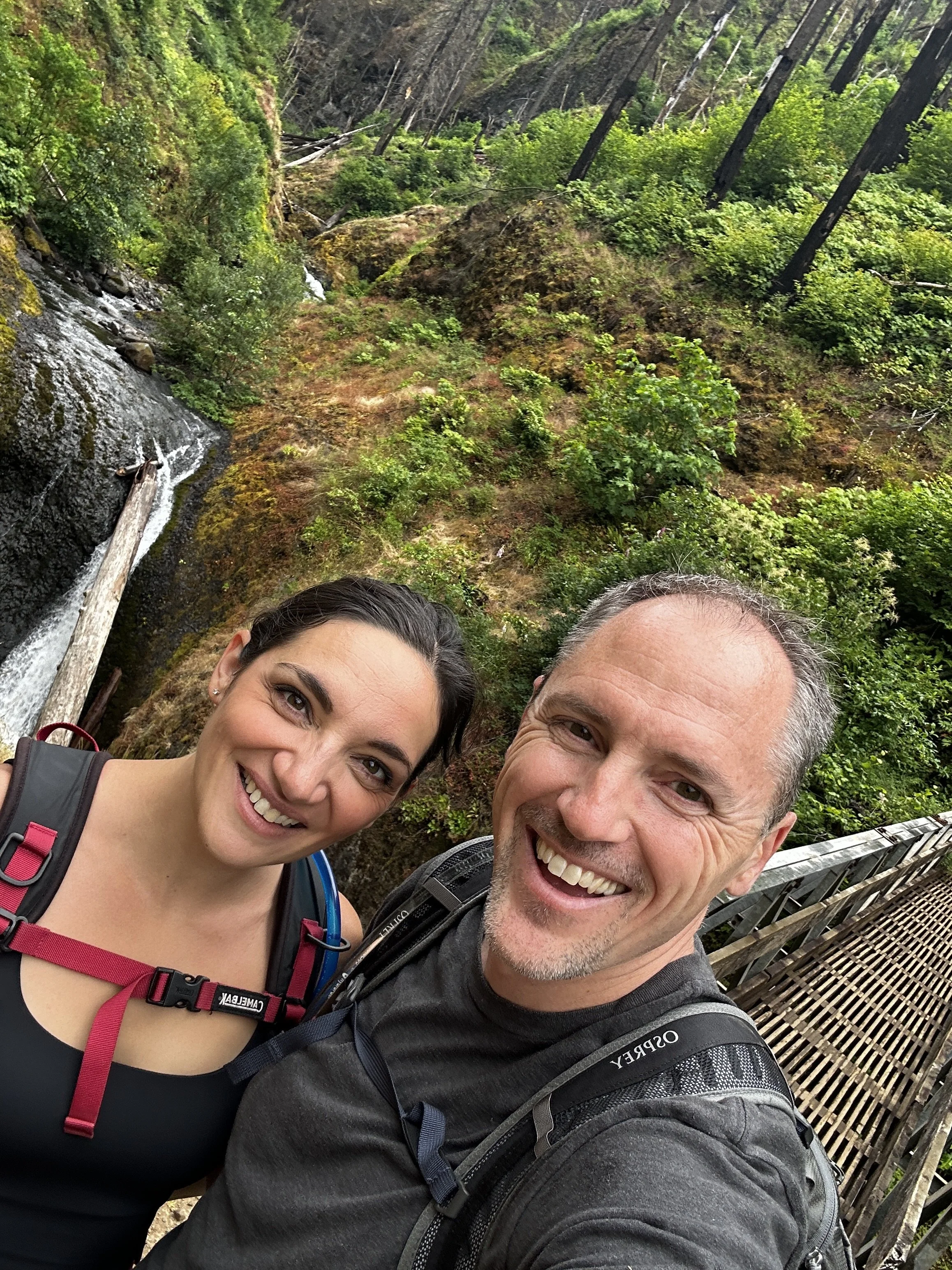
When I began writing The Forgotten Gospel in the fall of 2024, I wasn’t trying to write a book. I sat down to make notes for a small group. We were studying Leviticus, and I thought we needed one extra session: “Why Jesus Doesn’t Replace Leviticus.”
Three hours later, I looked up from the computer. Those notes had become a river of their own, and I realized that I wasn’t writing notes anymore. Mike walked into the kitchen and asked what I was working on. “I think I’m writing a book,” I said, stunned at the pages in front of me.
He smiled, kissed the top of my head, and said, “Told you!”
He’s been right all along.
This man has championed my writing forever and funded this project without hesitation—being both the banks of the river and, quite literally, the bank.
And its been his great joy to do so. He has treated my book as though its a precious offering, and that bringing these words into the world is his privilege. He’s read every draft and listened to me talk (endlessly) about Leviticus. He built this website, took the pictures, researched independent publishing. But mostly, he has been the banks that held the current of this book—bearing its weight with me, steady when the pace quickened and the inspiration surged like rapids—and to say I couldn’t have written this book without him is an understatement.
Somehow, he saw the words inside me long before I ever did. He understands the burden I carry like no one else. And long ago, he braced his own heart for the cost of carrying it with me. He has met me here in the work—undaunted by the vision, unthreatened by the voice, unwavering in his love.
So whatever good this book carries, it carries him with it too.
He’s the banks of this river—streadfast on the edges—holding it all in place…for as long as it takes.
His fingerprints are on every page, even if his name isn’t.