Birthday Candles and Tisha B’Av
This year my birthday happens to fall on Tisha B’Av. While I celebrate life, another people mourn over what the world lost.
Today is my birthday.
Another day I get to thank my Maker for giving me the precious gift of breath in these lungs. Every year is testimony to God’s kindness. Our Creator is outrageously gracious.
This year my birthday happens to fall on Tisha B’Av. While I celebrate life, another people mourn over what the world lost.
Two Calendars
Tisha B’Av is the day the Jewish people remember the destruction of both temples in Jerusalem, which amazingly occurred on the same day hundreds of years apart. They also mourn the suffering, exile, and heartbreaking loss of life that followed. It is a day marked by fasting, lament, and remembrance. Generation after generation, Jewish families hold this grief, refusing to forget the place where God has caused his name to dwell.
For me, this year is a real juxtaposition. One calendar tells me to celebrate; the other invites me to mourn.
The Chapter I Almost Cut
Last year, my birthday looked very different.
At my request, my husband took the day off work and took the kids out for several hours, giving me precious, uninterrupted time to work on my book. This time last year, I was nearing the final draft of The Forgotten Gospel, feverishly summing up chapter 11 and nervously preparing to hand off the entire manuscript my editor. When his comments eventually came back—overwhelming me with thoughtful criticism—I revised nearly everything he pointed out. But there was one suggestion I struggled with.
He urged me to remove chapter 11, Why Don’t We Have a Temple Today, entirely.
His reasoning was understandable. The chapter ventured into difficult territory—Israel, the Temple Mount, the land, Zionism—questions that lean political in the minds of most readers. In his mind, it belonged in a different book.
I mulled over his advice for weeks, but in the end, I retained the chapter in full. I couldn’t bring myself to put forward a book about Leviticus while ignoring the question of the temple’s place in our day, a loss that sits at odds with both Leviticus’s story and it’s hope.
My book argues that Leviticus is not merely a collection of ancient rituals expired at the cross, but the beating heart of the story about a holy God choosing to dwell among his people. The sacrifices, the priesthood, the festivals, the laws—they all orbit one glorious reality: Yahweh living in the midst of Israel.
Today, for a number of reasons, that reality remains painfully out of reach.
Maybe it’s nostalgia, but it feels a bit providential that a year later—after wrestling with such an divisive topic and wondering whether to include it in my book at all—my birthday would fall on Tisha B'Av, the day of mourning the loss that is God’s earthly abode.
How would I feel today, I wonder, had I convinced myself to remove that chapter because it was “too political?” “Too disconnected” for readers from the gospel, from all God is doing through his Messiah?
To me, and to many others, the temple is the crown jewel in God’s beautiful plan to redeem and restore all things.
Had I removed the chapter, I fear I may have spent today doing what my book ultimately cautions its readers against: celebrating God's faithfulness to me while remaining indifferent to the people and place through whom God promises to work in the world.
The Fallen Tent at the Center
Without the temple, Israel cannot experience the covenant fullness of God's promised dwelling among them. And if God is not dwelling in the midst of his people in the way he promised, his covenant purposes remain publicly unfinished before the nations.
Moses himself appealed to this very concern. If Yahweh abandoned his people in the wilderness, the surrounding nations would conclude that he was unable to fulfill the promises he had made (Numbers 14:13–16).
Centuries later, Ezekiel looked beyond exile to the day those promises would finally reach their fulfillment:
"My dwelling place shall be with them... Then the nations will know that I am Yahweh who sanctifies Israel, when my sanctuary is in their midst forevermore" (Ezekiel 37:26–28).
The Jerusalem temple has never been merely about Israel. It is also God’s witness to the nations that he is faithful to every word he has spoken.
While I may have spent last year wrangling the words to explain all this, this year, Tisha B’Av teaches me to hold gratitude and longing together—to rejoice in the salvation God has already accomplished and to pray with greater urgency for the restoration yet to come.
Whether it’s Leviticus, the temple, or the biblical narrative itself, I remain convinced that none of it is a story whose central hope has been transcended, transferred, or “fulfilled in Christ,” but the ongoing oaths of a Living God whose promises are still moving toward their great destination.
The Hope
As a disciple of Jesus, I rejoice in the astonishing realities revealed in the risen Messiah. A small foretaste of God’s Spirit has been unleashed in the world, reaching far beyond the walls of a temple complex. He dwells with people in ways that surpass what anyone expected. Those truths are as life-changing as they are beautiful.
But celebrating the worship of Yahweh “in Spirit and truth” and living in the light of the Master’s resurrection does not require me to dismiss the grief of another people whom my God repeatedly promises—and commands—to long for the day his presence will once again dwell among them in Zion.
In fact, I believe the opposite is true.
The prophets envision a future in which Messiah restores the ruins of the ancient walls. The God who once filled the tabernacle, Solomon’s temple, and the devout Jews gathered at the temple in Acts 2 has not abandoned his promises.
The greatest hope of our faith is the hope to which Leviticus points: that God will dwell fully with his people forever. We long for the day when all creation is redeemed—when the presence of Yahweh fills the earth as the waters cover the sea. We long for the day when God's dwelling is once again in the midst of his people, and the nations finally know him as he promised.
Tisha B'Av is not in competition with the gospel. It is the lament of its heart—a sorrowful hope in the very good news the temple reflects: here on earth as it is in heaven.
Gratitude and Longing
On this twenty-third of July, I have much to celebrate: another year of life, a beautiful family, a published book—complete with chapter 11, a chapter I am not ashamed put in front of my readers. Perhaps it can inspire us all to pray with greater compassion for a people who still safeguard the heart of what the world lost so many years ago.
Birthdays teach me that life is finite. But resurrection teaches me that death is not the end. I rejoice because I know that one day I, too, will be born again—this time, to immortality in a day where we mourn the fallen tent of David no more.
Tisha B'Av likewise reminds me that things are finite, death is real, and loss is painful. But faith reminds me that my God can rebuild the ancient ruins. Like Adam and Eve—bone of my bones and flesh of my flesh—the heavenly sanctuary and its earthly counterpart mirror each other. Distinct, yet inseparable. One reflecting the glory of the other until the great mystery is complete, and Yahweh brings them together in shalom.
Oh dear God, I thank you for another year of life and vitality, merited only by your incredible kindness. Thank you for your faithfulness through seasons of both joy and sorrow, of mourning and dancing.
And today, on a day of joy and of solemn day of remembrance, I join my prayers with your people. Comfort those who mourn in Zion, who mourn outside of Zion. Remember your covenant with their fathers. And Lord, hasten the day when your promises are fulfilled, your presence once again fills your holy place, and mourning gives way to everlasting joy.
Until that day comes, I pray that my life—every birthday you grant me now, and every moment in the resurrection—be spent singing and writing and prophesying of your great and unfailing faithfulness.
“You have turned my mourning into dancing... O Yahweh my God, I will give thanks to you forever.” (Psalm 30:11–12)
An Offering of Words
I wrote The Forgotten Gospel by accident. One blustery November afternoon, I sat down to prepare notes for a Bible study on Leviticus—nothing more. Just an inner determination to understand a difficult book of the Bible well enough to help others through it.
I wrote The Forgotten Gospel by accident.
One blustery November afternoon, I sat down to prepare notes for a Bible study on Leviticus—nothing more. No outline or book proposal. No vision for a manuscript. Just an inner determination to understand a difficult book of the Bible well enough to help others through it.
My notes kept growing.
What I thought would be a couple pages became five, then ten. I remember looking up a few hours later and realizing I hadn’t prepared a lesson. I had stumbled into the early pages of a book.
Weeks of writing turned into months. I kept going.
At 20,000 words, I began to think this project might be worth finishing. At 30,000, I became acutely aware that I had no idea what I was doing.
So I did what I have always done when I find myself in unfamiliar territory. I read a book about it.
I studied structure, pacing, argument, tone. Having never written anything so long, I had to learn how to shape something cohesive out of something that had, until then, simply been pouring out.
At 65,000 words, I decided I needed help—an editor.
I didn’t know where to find one, or what that process looked like, but step by step I figured it out. I cut the manuscript down—too much, as it turned out—and nervously sent it to someone who was far more qualified than I was.
What came back was humbling. Pages of thoughtful feedback and rigorous queries left me a bit overwhelmed. My editor argued with nearly every point, which was exactly what I needed. His criticism forced me to see both the strengths and the gaps in what I had written.
So I went back in. I restored what I had cut too quickly and rebuilt the introduction from the ground up. I battled with chapter nine, again.
Notes became paragraphs. Paragraphs became the appendix I never planned to include. I wrote it in two days, a feat that still amazes me.
I wrote until there was nothing left to say. Slowly, a manuscript began to emerge.
By then, the project was no longer an accident.
It had become an offering.
An Offering of Words
At some point I made the decision to write something real—something serious, something weighty. Something worthy of the people who would read it. And something worthy of giving to the Most High God.
The accident became an offering of words.
Writing, as I quickly realized, was only part of the work. I needed a design that did right by the project. I needed to make publishing decisions, to seek endorsements, to place my work into the hands of influential people who did not know me and had every reason to dismiss everything I said.
And many did.
Doors closed. Emails went unanswered. Some did not take me seriously.
But others did. People from unexpected places—scholars, pastors, thoughtful authors and teachers—were willing to read and engage with the work I had done. When they emerged from it’s pages, their feedback made something very clear to me.
I had written something that, by God’s grace, was already beginning to serve others.
This book is not a product. It’s an offering. I trust that if these words carry weight, they will find their way into the hands of those who need them.
That principle is why I chose to publish this book independently. I wanted the freedom to be able to give it away electronically to those who lack the means to purchase it, a desire a traditional publisher may have found difficult to accommodate. I invite anyone who is moved by the same spirit of generosity to support this work so that it can continue.
God is faithful to multiply what is given back to him. While I have labored to shape this book, the words themselves are not mine. They are a gift I am humbled to be entrusted with.
The Fruit of a Curious Heart and a Gracious God
Everything about The Forgotten Gospel is, in its own way, a blessed accident.
I didn’t begin with answers or a plan. I started with questions about Leviticus, sacrifice, the temple. About how to make a book people dread come alive for the those gathered in my living room each week. I needed to know how its authority harmonizes with Jesus and his mission, not in vague or symbolic ways, but in the way he saw it.
More than anything, I wanted to hear the voice of Leviticus itself.
I didn’t want to make it fit a framework I had already decided was true. I wanted to understand what it was saying—and why so few of us are willing to listen.
So I kept asking.
Over time, asking became searching. Searching became studying. Studying—over years now—grew into understanding.
Then the words came. I wrote them down.
But the truth is I should never have made it this far.
I am no one remarkable. I have no formal training in the upper echelons of theology or a ministry platform on which to stand.
And yet—this seems to be the way of God. He delights in blessing the accidents. He strengthens those who have no strength of their own. He entrusts things to the ones no one expects.
The Forgotten Gospel is not the product of credentials. It is the fruit of a curious heart and a merciful God who refused to leave me behind.
It took years for me to see that Leviticus is not a detour in the story of redemption, but a window into the very heart of what God is doing—and will yet do.
In the end, the words just came as they always do.
Unbidden. Unforced. Already forming inside me long before they ever reached the page.
Sometimes the work we never intend to do becomes the burden we are asked to carry.
Laid Down in Gratitude
I have carried these words a long way—
from where they first began
to where they now come to rest.
I lay them down on the altar of this frail and earthly frame,
in gratitude—an offering to the One who first gave them.
May they rise, to you oh Lord,
and find favor in your sight.
Banks of a River
You don’t always notice the banks of a river. Only later, when you emerge downstream and catch your breath from the surging journey, do you realize something has been holding it all together.
“I wanna hold you close but never hold you back,
just like the banks do the river.”
You don’t always notice the banks of a river.
You first notice the current, the pull, the way it carries you somewhere you didn’t plan to go.
Only later, when you emerge downstream and catch your breath from the surging journey, do you realize something has been holding it all together.
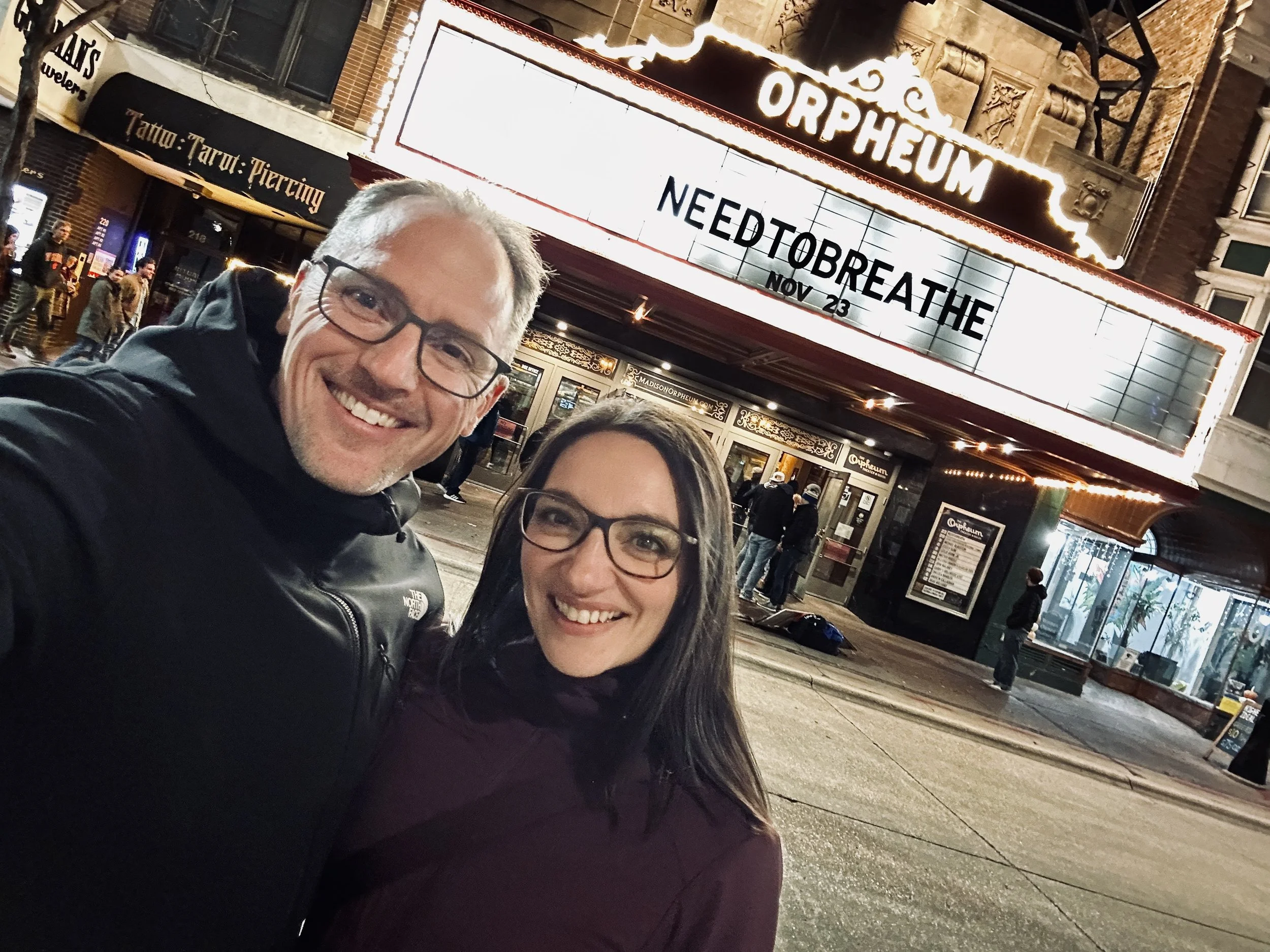
Long before I ever typed a single word of The Forgotten Gospel, my husband knew I would write a book.
Back when our house was full of babies and toddlers, he would take them out—to the park, the store, anywhere—just so I could sit in the quiet and write my little hobby blog. I didn’t have a following. (I still don’t.) What I write doesn’t make us any money.
But he knew it mattered. “I’m telling you. You’re going to write a book one day,” he’d say. And I’d laugh. “About what? No one cares what I have to say.”
He never argued. He just watched the years go by as I filled notebooks with Bible study charts and references. Watched as I read theologians far beyond my depth while making dinner. He’d tidy the papers piled up around my desk—notes spilling like water over the edges, books emerging from a sea of papers, like a sandbar in a river.
He never once complained about the mess or questioned the hours. He never doubted the Bible studies I led or the materials I wrote myself. He never asked why I put so much effort into something that lived only a hard drive or ended up in someone’s recycle bin.
Three Christmases ago, he gave me a small box. Inside was a brand-new MacBook Air. I could have cried. For years, I had worked on a twelve-year-old laptop—slow and glitchy with sticky keys and failing battery. But it ran, and with four kids, there are always more pressing needs. It never even crossed my mind to ask for new computer.
When I asked him why he would do such a thing, he said, “Because what you write is important. You’re important. It brings me joy to give you the tools to do the work God puts on your heart.”
He has been my cheerleader when things went well, and my shelter when they didn’t. When I came home discouraged after being dismissed, humiliated, or laughed out of the room for what I believe, he was the one who anchored me when everything in me wanted to drift back into the shallow waters. He’d lift up my head and remind me why I had waded out into those deep parts in the first place.
That’s Mike. It’s all or nothing with him. There is no middle ground. He moves toward hard things without hesitation, thrives when the odds are stacked against us, and somehow, in the eleventh hour, he finds a way forward—even when it matters to no one but us. Especially then. And how a nerd like me ended up with a cool guy like him, I will never understand.
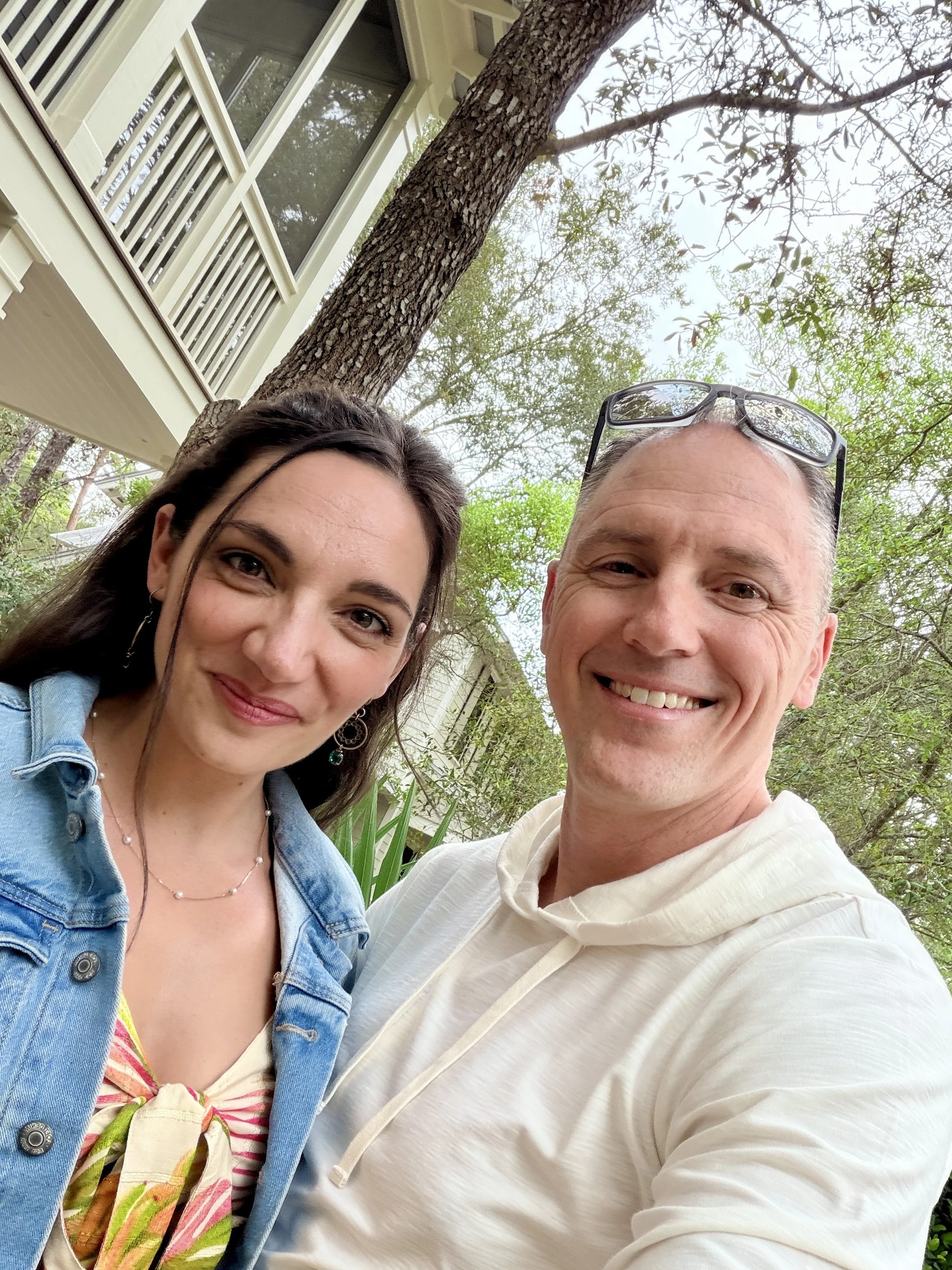

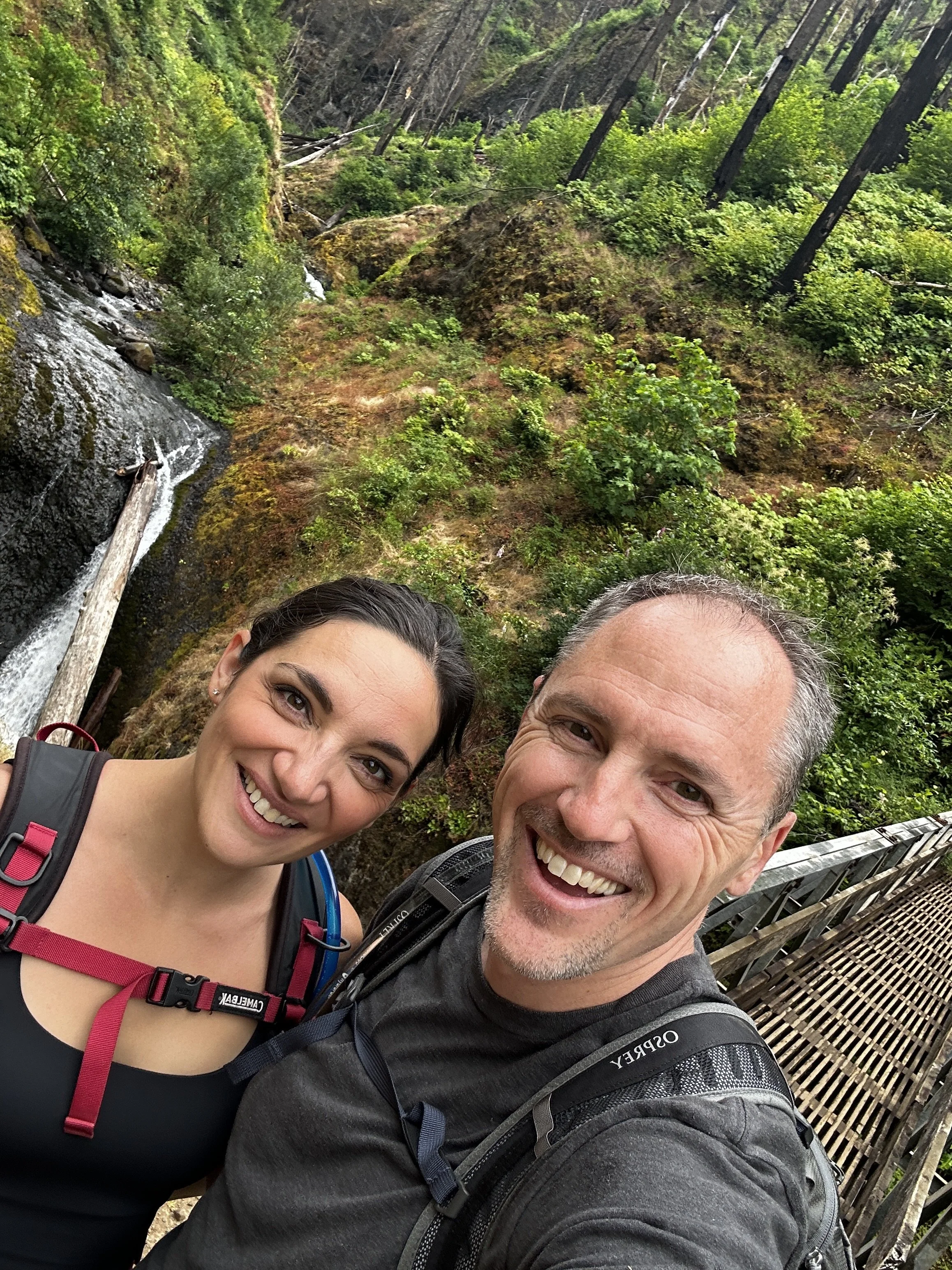
When I began writing The Forgotten Gospel in the fall of 2024, I wasn’t trying to write a book. I sat down to make notes for a small group. We were studying Leviticus, and I thought we needed one extra session: “Why Jesus Doesn’t Replace Leviticus.”
Three hours later, I looked up from the computer. Those notes had become a river of their own, and I realized that I wasn’t writing notes anymore. Mike walked into the kitchen and asked what I was working on. “I think I’m writing a book,” I said, stunned at the pages in front of me.
He smiled, kissed the top of my head, and said, “Told you!”
He’s been right all along.
This man has championed my writing forever and funded this project without hesitation—being both the banks of the river and, quite literally, the bank.
And its been his great joy to do so. He has treated my book as though its a precious offering, and that bringing these words into the world is his privilege. He’s read every draft and listened to me talk (endlessly) about Leviticus. He built this website, took the pictures, researched independent publishing. But mostly, he has been the banks that held the current of this book—bearing its weight with me, steady when the pace quickened and the inspiration surged like rapids—and to say I couldn’t have written this book without him is an understatement.
Somehow, he saw the words inside me long before I ever did. He understands the burden I carry like no one else. And long ago, he braced his own heart for the cost of carrying it with me. He has met me here in the work—undaunted by the vision, unthreatened by the voice, unwavering in his love.
So whatever good this book carries, it carries him with it too.
He’s the banks of this river—streadfast on the edges—holding it all in place…for as long as it takes.
His fingerprints are on every page, even if his name isn’t.